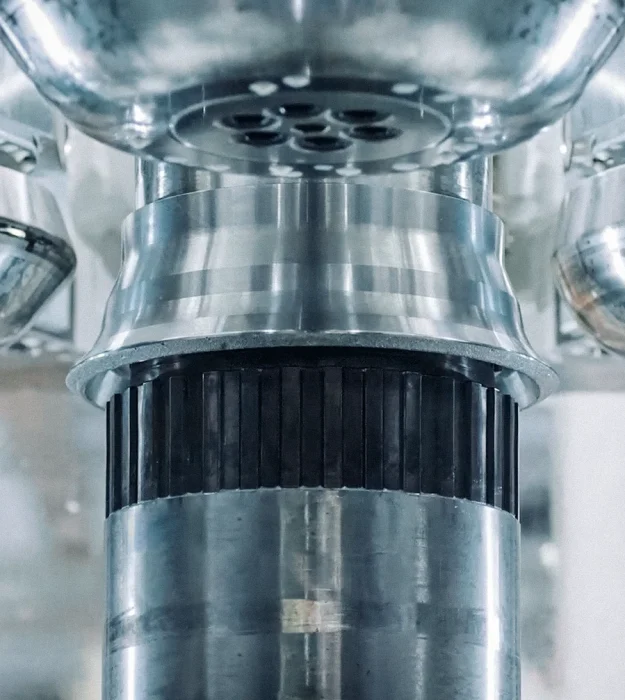
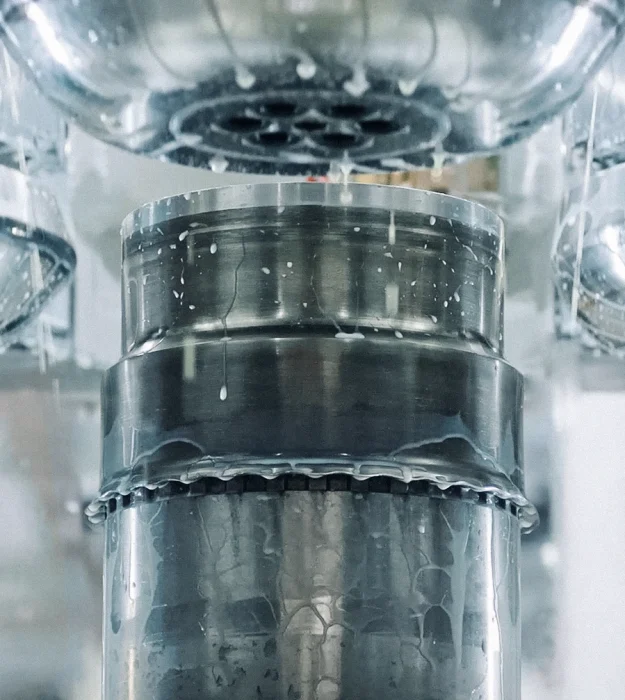
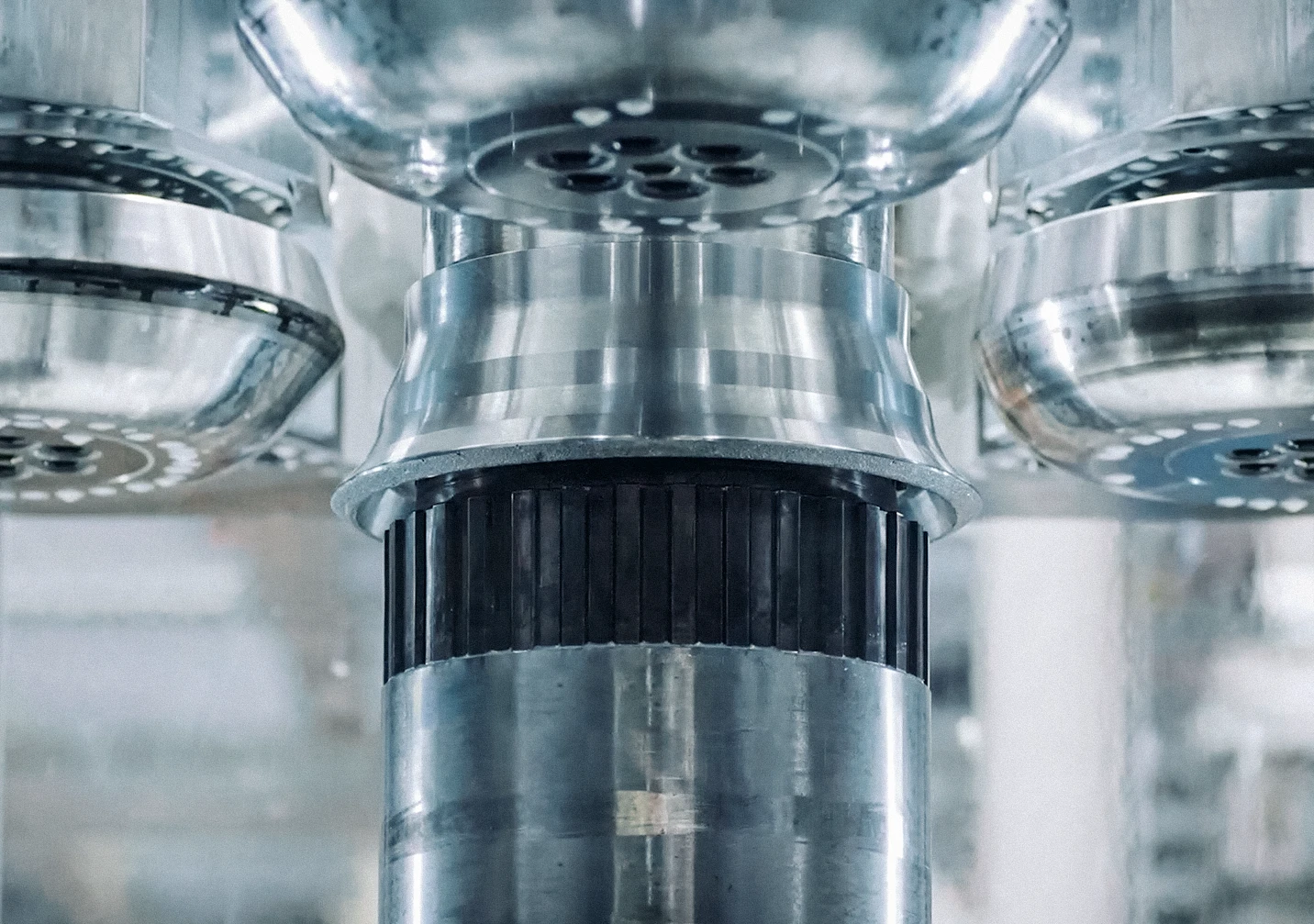
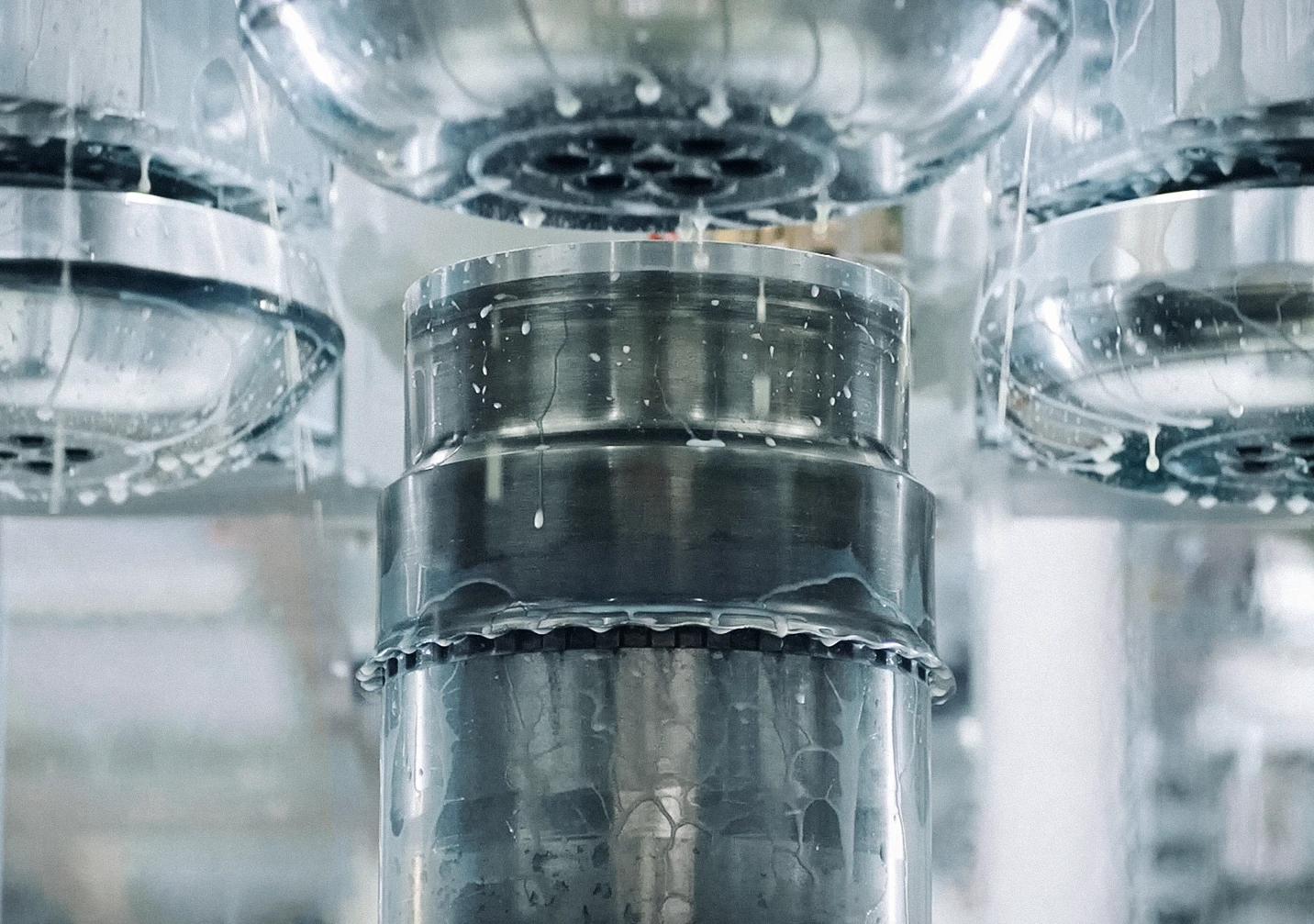
Flow-forming technology is a milestone in cold forming. It enables the production of rotationally symmetrical components with maximum precision, variable wall thicknesses and complex contours. A blank is clamped on a shaping mandrel, set in rotation and cold-formed using driven rollers. This produces components that are difficult or impossible to realise with other processes.
The process impresses with its flexibility, cost-effectiveness and quality - from near-series prototypes to large series.
By combining flow-forming with downstream operations such as laser cutting, laser hardening or mechanical post-processing, the properties can be tailored precisely to the customer's requirements.
The flow-forming process leads to a significant work hardening of the material, which not only ensures high stability, but often also makes subsequent hardening unnecessary. At the same time, tool costs can be significantly reduced compared to forging or machining - even small quantities can be produced economically.